
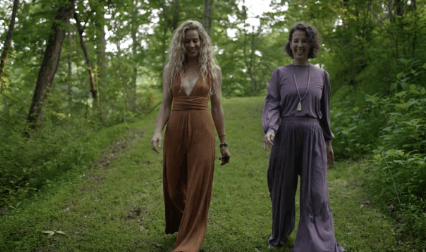
There is a Japanese word — shinrin-yoku — that translates roughly as "forest bathing." It doesn't mean hiking, or exercise, or reaching a summit. It means the practice of slowly and quietly placing yourself under the trees, letting your senses widen, and letting the forest do what the forest does.
At Munaya, in the folded ridges outside Marshall, North Carolina, this is one of the simplest and most repeatable practices we offer. There are no requirements. No fitness level. No belief system. Only the trees, and enough time to notice them.
What forest bathing actually is
Forest bathing was formalized in Japan in the 1980s as a public health practice. The idea was simple: chronic stress was rising, cities were expanding, and something ancient was being lost. So the Japanese Ministry of Agriculture, Forestry and Fisheries coined shinrin-yoku and began designating official therapy forests.
In practice, a forest bath is a slow, unhurried walk — sometimes only a few hundred meters over two or three hours — with your phone away and your attention open. You notice light through the canopy. The temperature of the air on your skin. A single leaf turning. It is closer to meditation than to hiking.
What the science says
A now-large body of research, much of it out of Chiba University and Nippon Medical School, has measured what happens in the body during a forest bath. Studies have documented lower cortisol, lower blood pressure, lower resting heart rate, and a measurable increase in the activity of natural killer cells — a class of immune cells that respond to viruses and abnormal cell growth.
Part of the effect appears to come from phytoncides, the airborne compounds that trees release to protect themselves. Breathe them in, and something quiets in the nervous system. The body reads the signal: safe here.
"You are not adding anything. You are subtracting the noise, and letting the forest speak."
Why the Blue Ridge, and why here
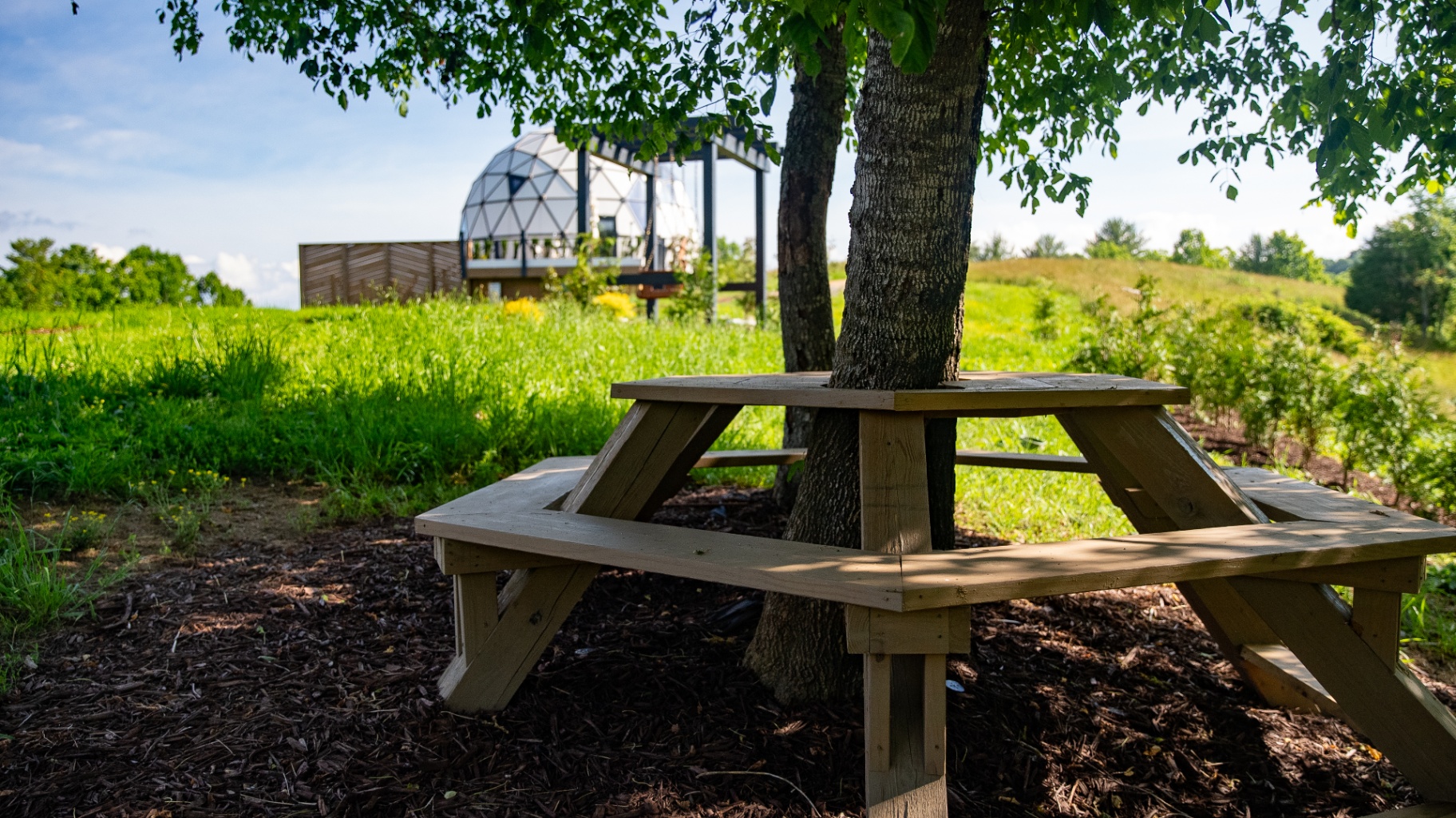
The Southern Appalachians are one of the oldest and most biodiverse temperate forests on earth. The ridgeline that Munaya sits on is a mixed hardwood cove — oak, hickory, poplar, maple, mountain laurel — the kind of forest that changes character every hundred feet. In spring the ephemerals come first. In summer the canopy closes in. In autumn everything catches fire. In winter the ridges reveal themselves and you can see for miles.
Asheville and the surrounding Blue Ridge draw people looking for this exact thing — a landscape that is still wild enough to regulate a nervous system that has been running hot for years. Munaya is a forty-minute drive from the airport, but the moment you turn onto the property road, the sound changes.
The four elements as medicine
The forest is one door. On the Munaya land there are four, organized around the elements that show up on the property:
Earth — grounding walks, barefoot on moss and stone, the felt sense of weight and support.
Water — the creek, the mineral springs a short drive away in Hot Springs, and the slow work of soaking.
Fire — the evening fire circle, cacao, breath, and the practices that ask you to sit with what is warm inside you.
Air — high ridgeline breathwork, qi gong on the deck, and the practice of noticing the wind on the skin.
Read more about how we work with them on the About page.
How to forest bathe — a simple practice
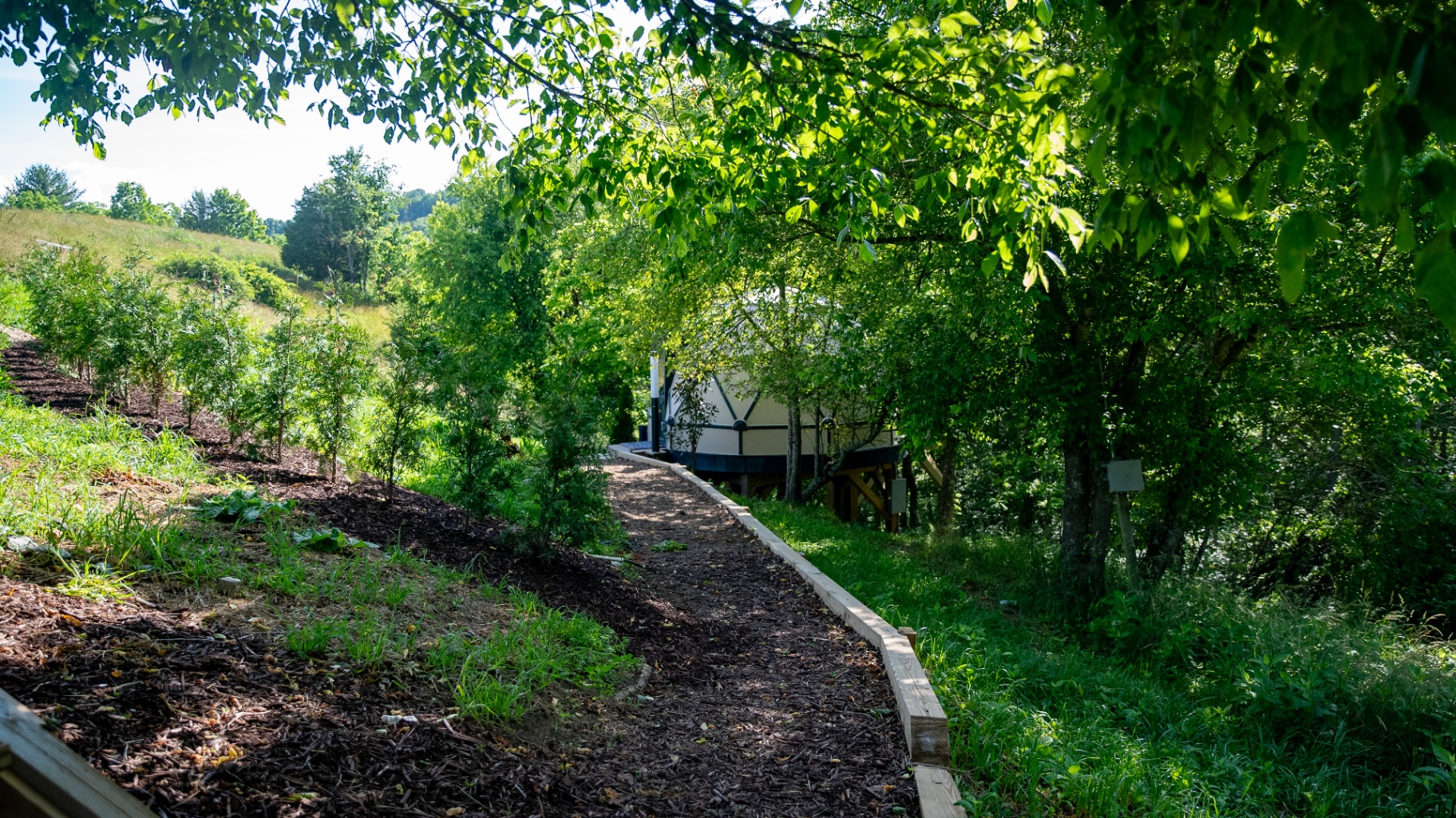
You do not need a guide to begin. If you are on the land, or in any old forest, the practice is the same:
1. Leave the phone behind. Or turn it fully off. The forest cannot reach you through a screen.
2. Walk more slowly than feels natural. Half the pace you would normally choose. Then half again.
3. Notice one sense at a time. First sight. Then sound. Then smell. Then the feel of the air on your skin.
4. Stop, often. Sit against a tree. Watch a single leaf. Wait for a bird to return to a branch.
5. Stay for at least two hours if you can. The nervous system needs the first hour just to arrive.
Coming to Munaya for it
Every stay includes access to the trails and the forest on the property. Guided forest bathing sessions, sound work under the canopy, and elemental practices are offered as part of the Experiences menu and inside every retreat.
You can come for a night, or a week, or long enough that the forest becomes something you know.